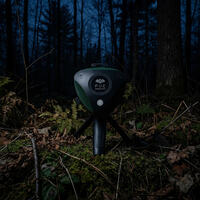
Hear the Bats Flying Overhead Tonight

From search calls to feeding buzzes, discover the hidden night life above your backyard.

You Likely Have Bats Overhead Every Night

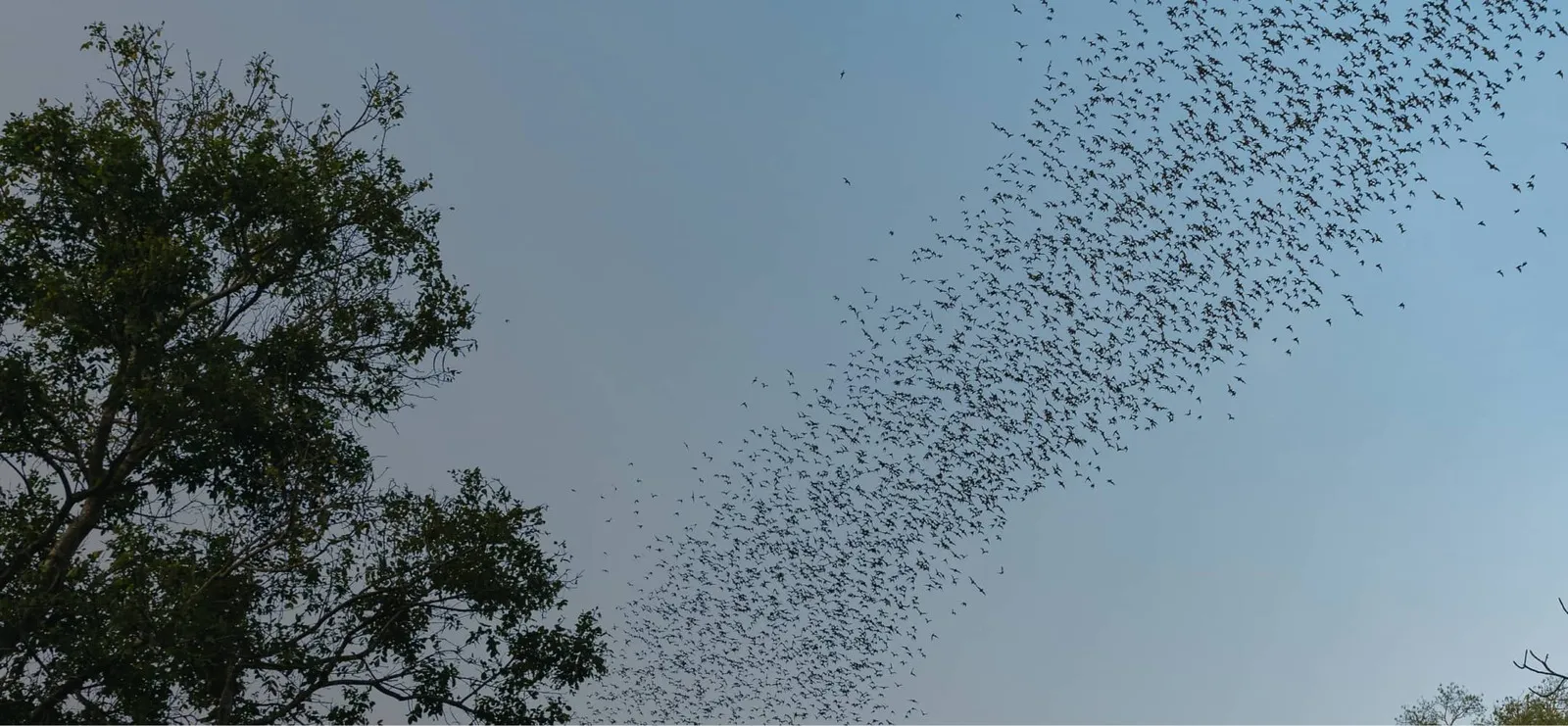
Most neighborhoods host multiple bat species. They emerge shortly after sunset, hunt intensely for several hours, and disappear before most people ever notice. Even suburban yards can see dozens of passes per night during peak season.

But you can’t hear them — until now.

Why Bats Matter

Bats are essential components of ecosystems around the world. Their nightly activity supports agriculture, maintains plant diversity, and shapes entire food webs.

Insect Control

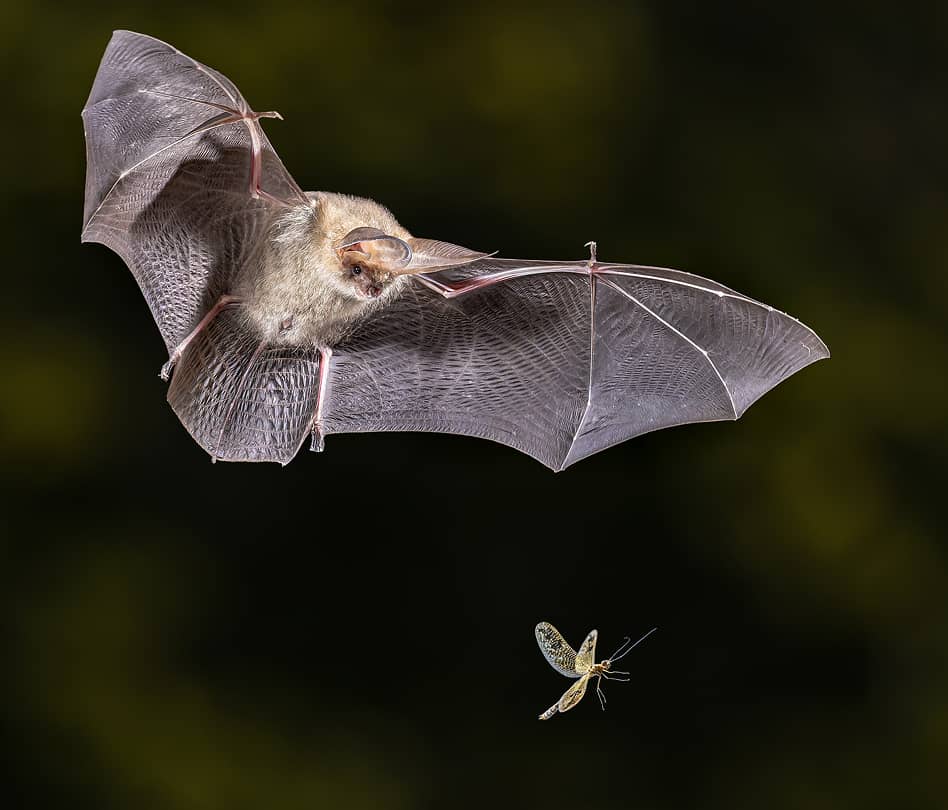
Many bats consume thousands of insects per night. Across agricultural regions, their pest-control services are valued in the billions annually.

Pollination

Some bat species pollinate night-blooming plants, including economically important crops in certain regions.

Seed Dispersal & Ecosystem Health

In many ecosystems, bats help regenerate forests and maintain plant diversity.

Bat-Ultrasonic-101

Ultrasonic Sound 101

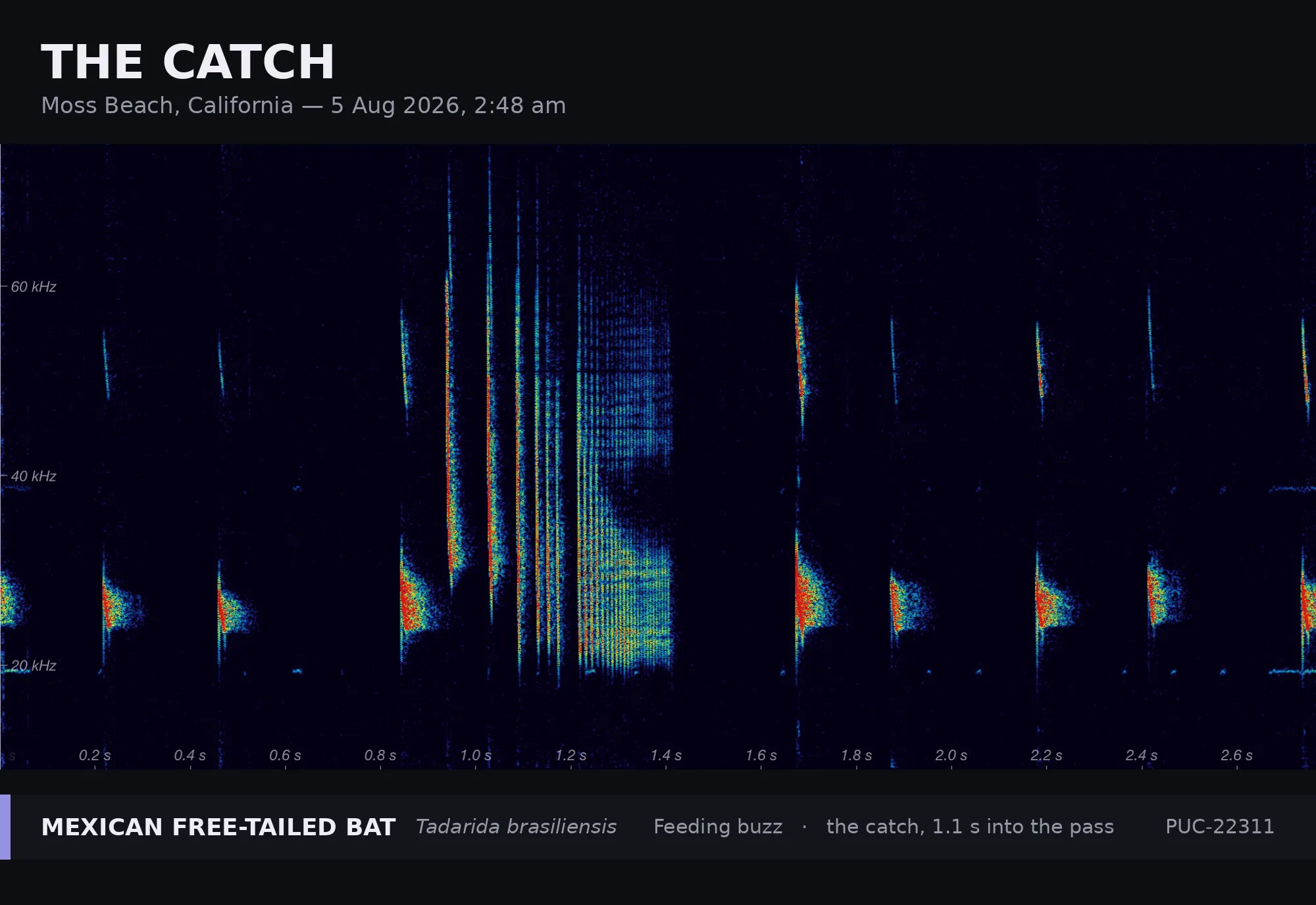
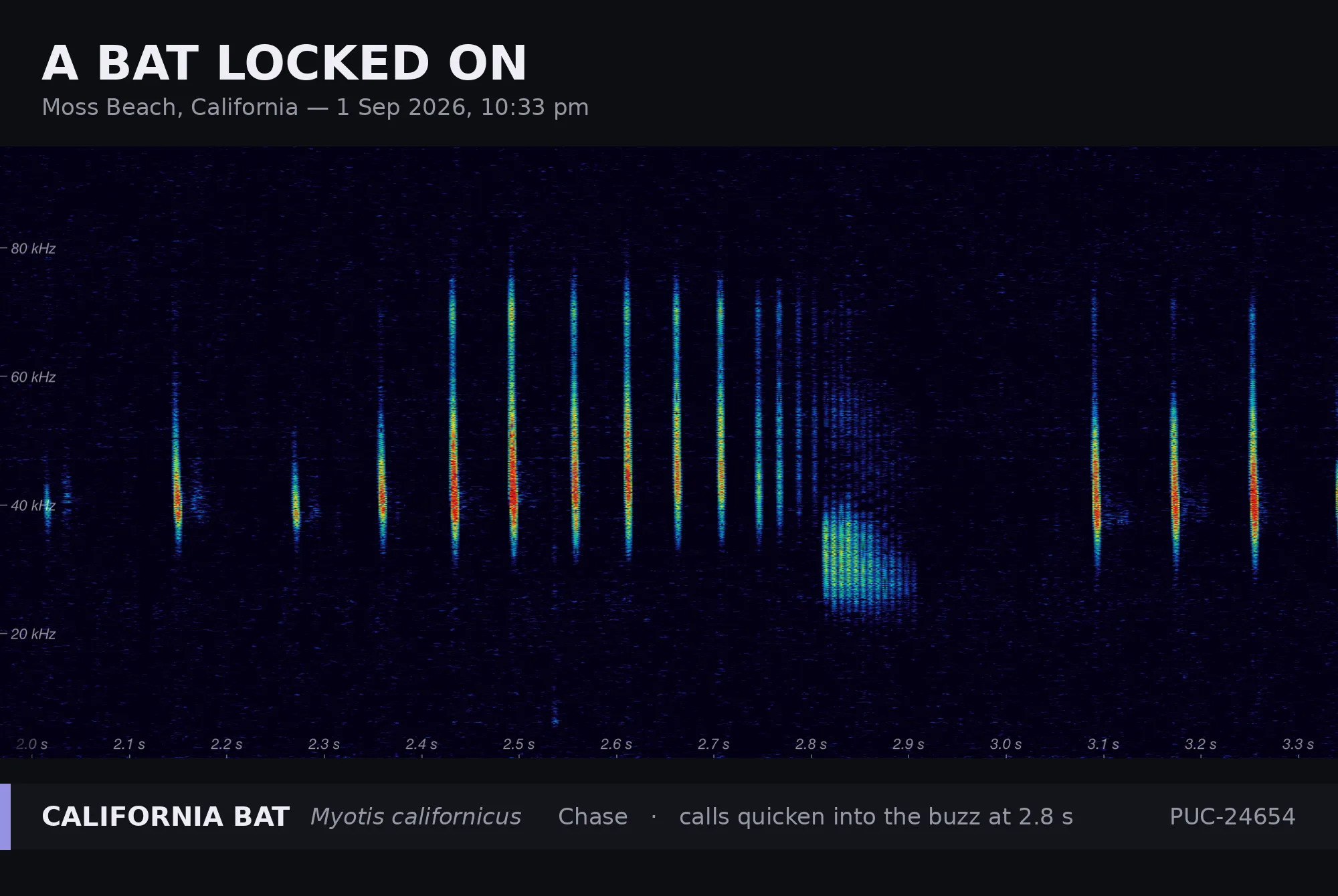
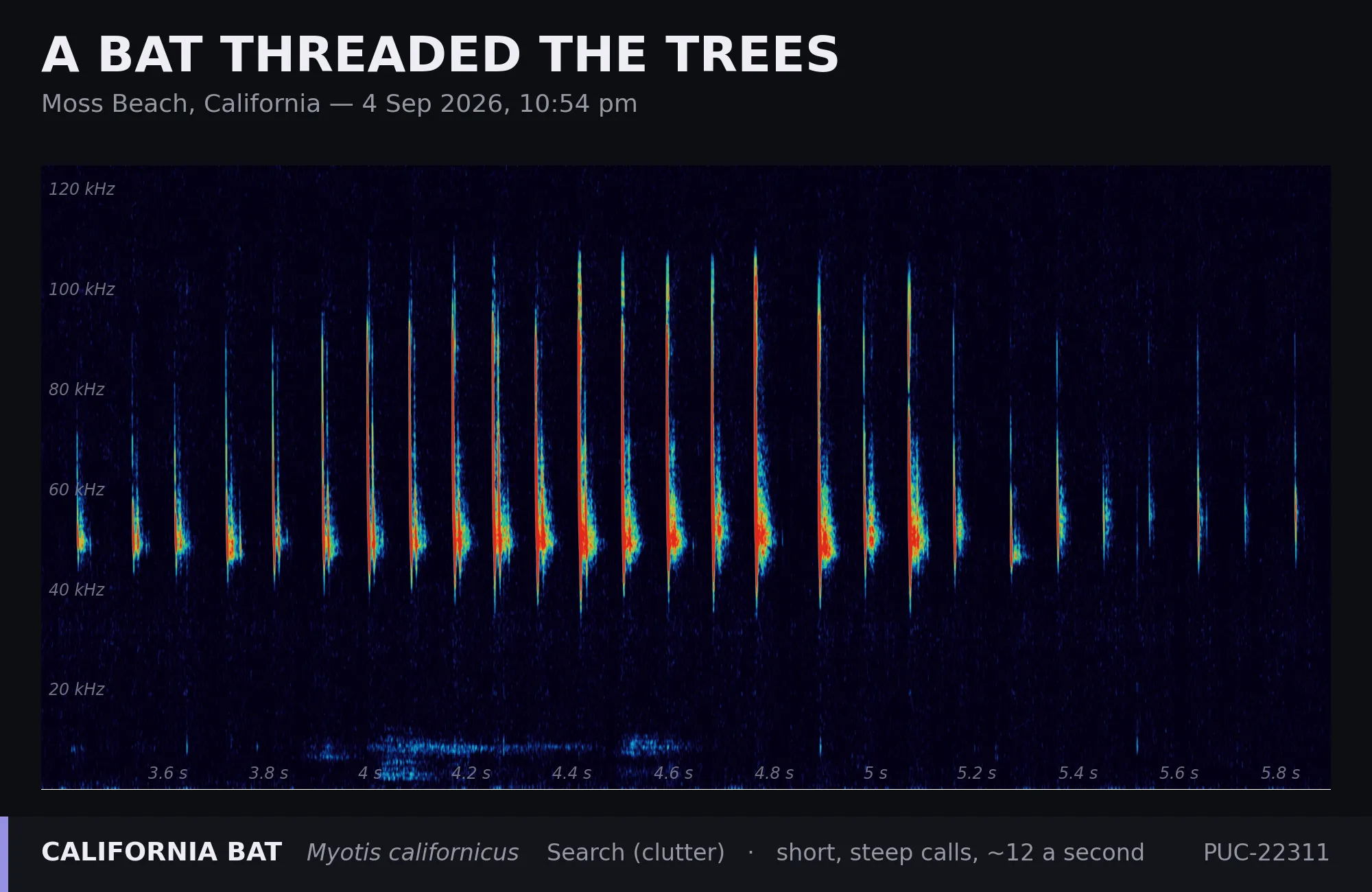
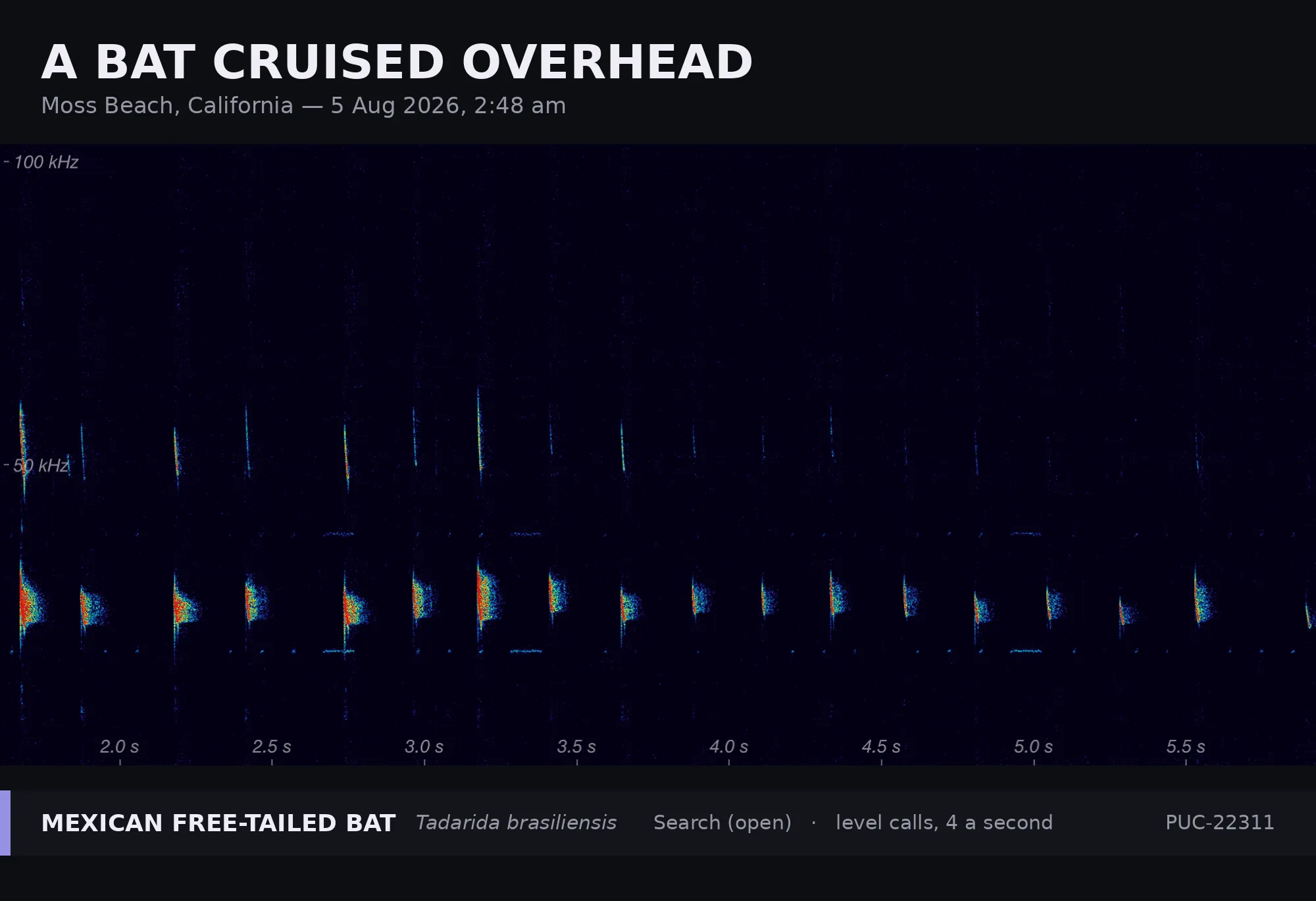
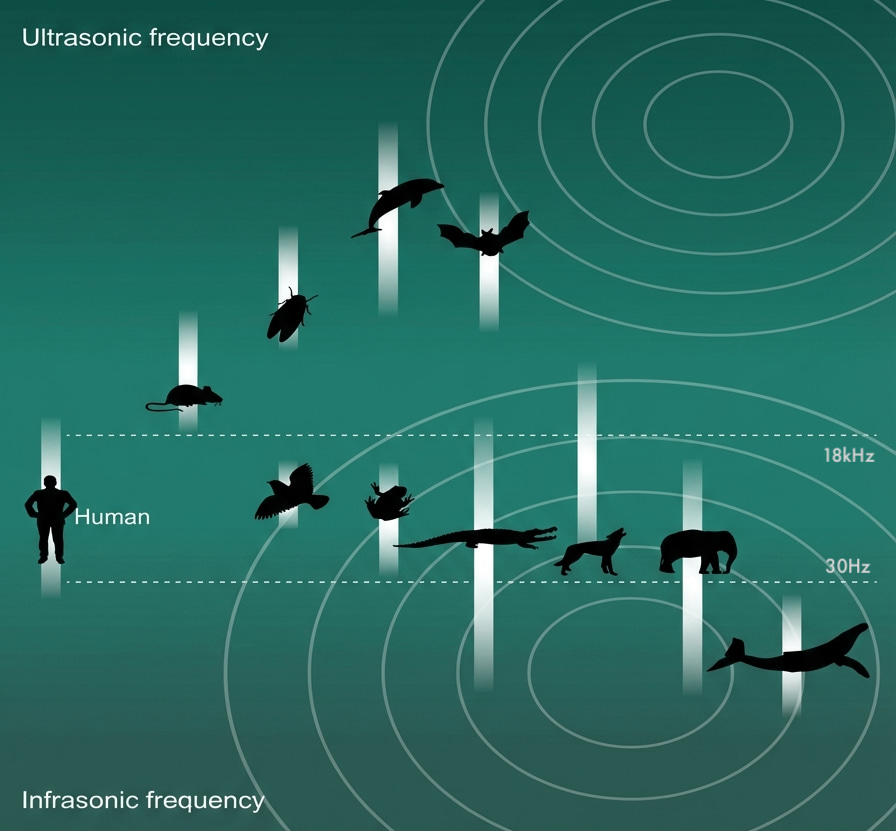
Bat echolocation is ultrasonic. For many insectivorous species, dominant call frequencies commonly fall in the 20–60 kHz range — though across species, calls can span roughly 11 kHz to well above 100 kHz.

Capturing this detail requires higher sampling rates — especially for higher-frequency species and for preserving fine acoustic structure.

Not All Bat Sounds Mean the Same Thing

Continuous-Listening-at-Scale

Active-Bat-Nights

Continuous Listening at Scale

BirdWeather’s network of more than 5,000 continuously listening stations captures full nights of sound across regions and seasons. That scale has already supported ecological research — including large-scale analysis of how light pollution alters wildlife behavior, recently highlighted by NPR.

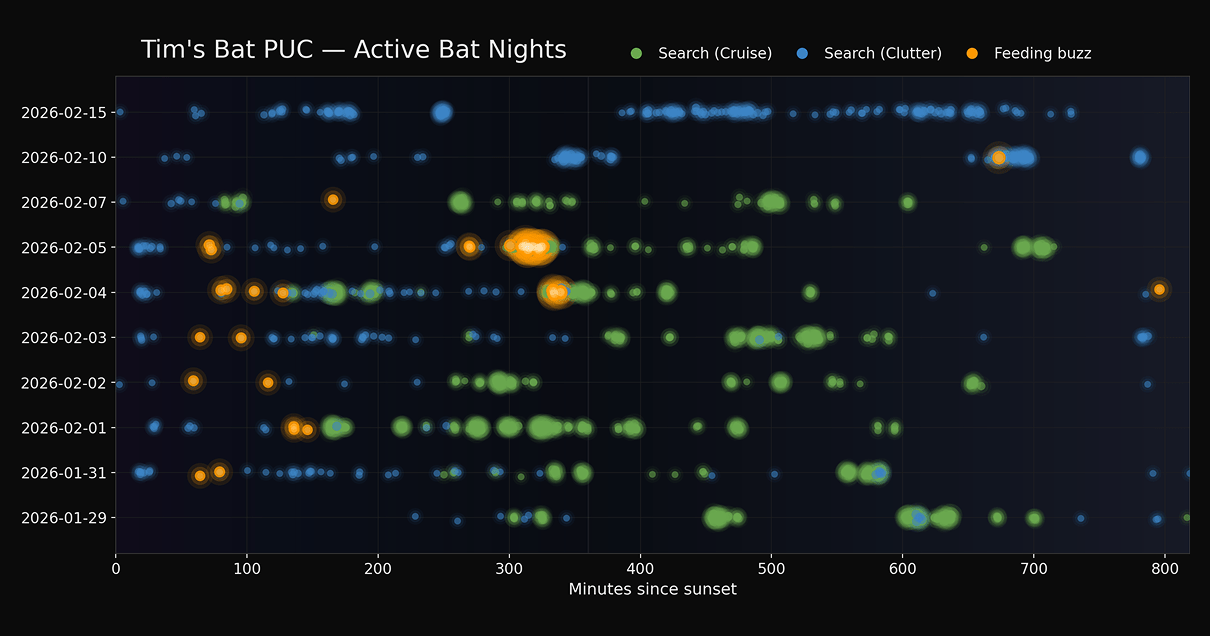
As ultrasonic monitoring expands across the network, thousands of nights of detections can be combined into structured timelines. Patterns that would be invisible in short recordings begin to emerge: emergence timing after sunset, shifts in feeding intensity, seasonal variation, and changes in behavior across environments.

This is not just about hearing bats — it’s about understanding how they move, hunt, and respond to their environment over time.

Hearing-Range

Extending Into the Ultrasonic Spectrum

Over the past few months, we’ve extended the existing BirdWeather PUC into the ultrasonic range. Through firmware refinement, signal optimization, and microphone characterization, current-generation PUCs can now reach 128 kHz — far beyond what we originally anticipated.

What began as an audible-range wildlife monitor can now capture meaningful bat activity across the network.

In parallel, we’ve developed behavioral classifiers for Search (Cruise), Search (Clutter), Chase, and Feeding Buzz — transforming ultrasonic recordings into structured insight. That foundation is expanding toward species-level identification as ultrasonic data scales.

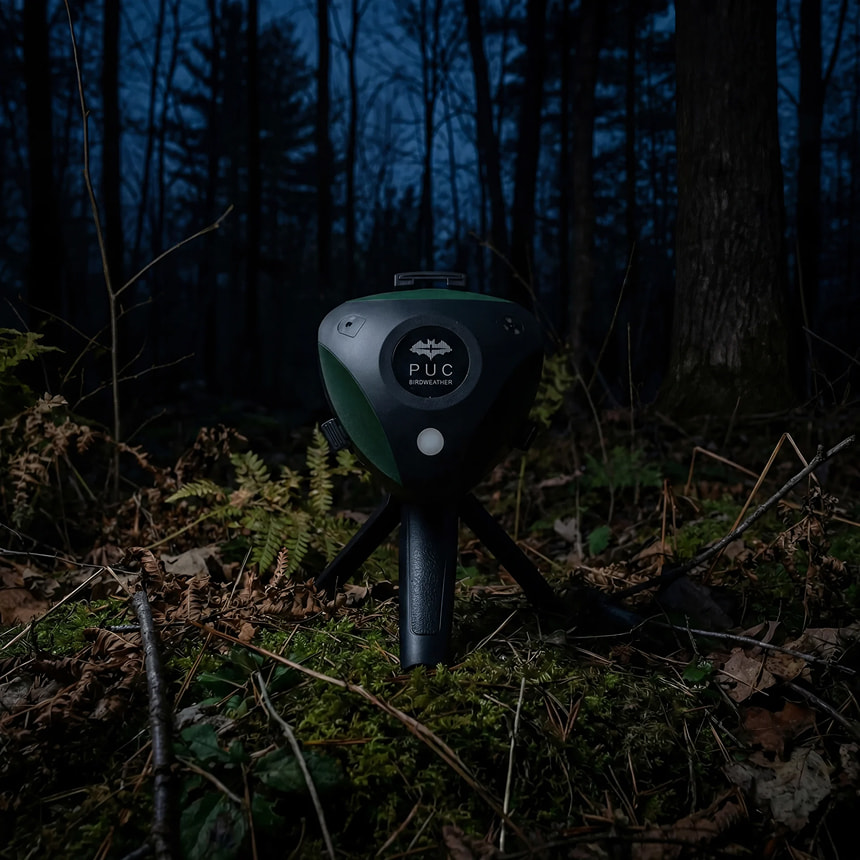
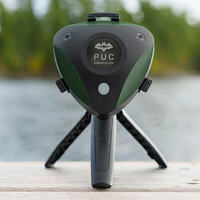
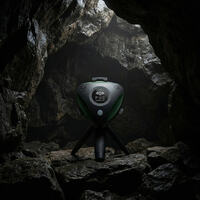
Introducing the BirdWeather PUC - Bat Edition

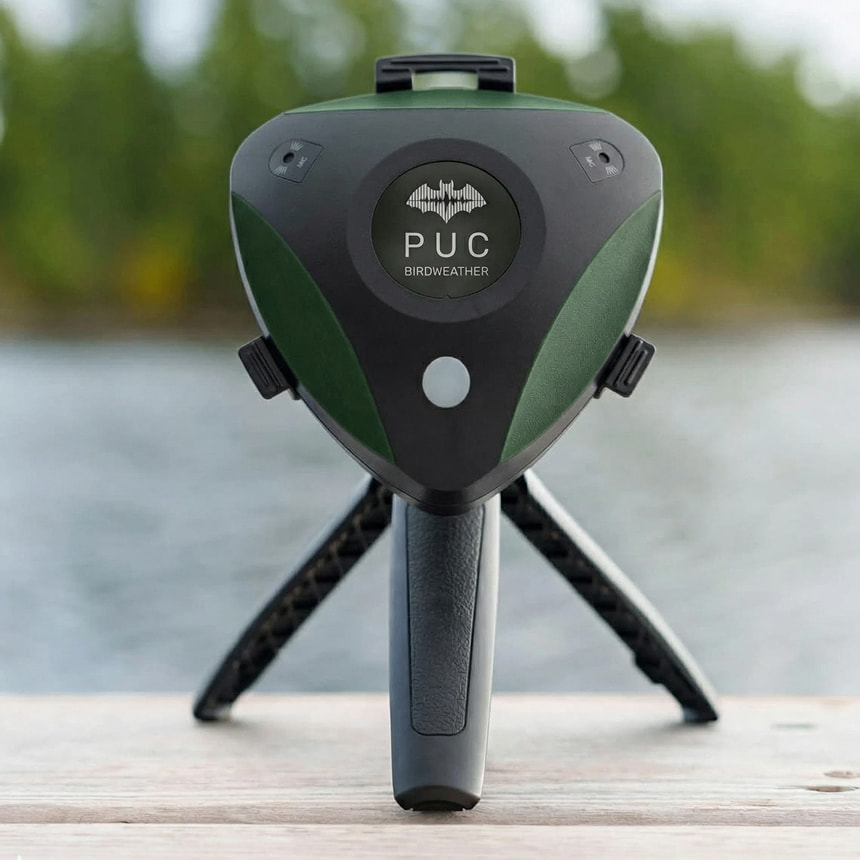
The Bat Edition is engineered ultrasonic-first. With capture rates up to 384 kHz, it preserves the full vocal range of most bat species — including high-frequency calls, harmonic detail, and feeding buzz sequences that lower-bandwidth systems may miss.

128 kHz opens the door. 384 kHz reveals the detail.

  • Ultrasonic-first design
  • Up to 384 kHz sampling rate
  • Preserves harmonic structure
  • Cloud-connected dashboards
  • Continuous all-night recording
  • Bat-specific activity visualizations
  • Charcoal gray / green color scheme
  • Rechargeable lithium-ion battery pack
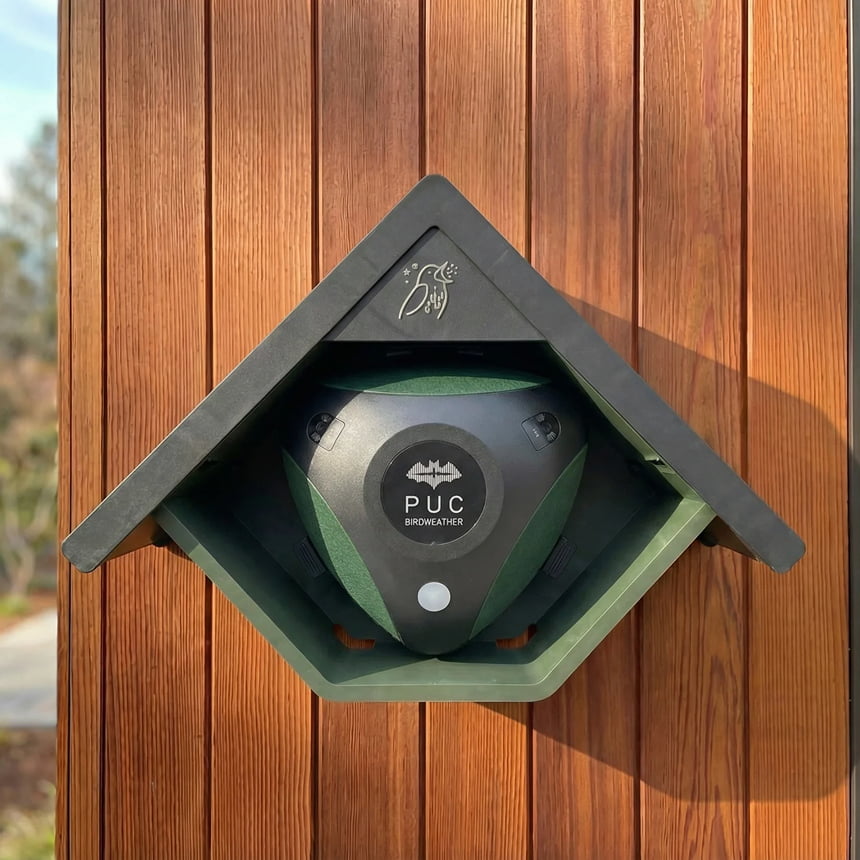
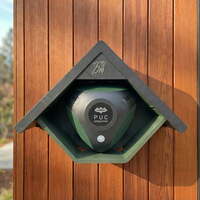
  • Bat Edition PUC Hut
  • 64GB SD Card (FLAC compression)

Discount codes can be added at checkout.

The Future of Bat Research — and Backyard Ecology — Will Be Built from Continuous Listening

Not by a single lab. Not by isolated recordings. But by thousands of backyards listening every night — across seasons, across regions, and across the full acoustic spectrum.

We’ll roll out ultrasonic support in phases — beginning in March with Bat Edition early adopters, expanding to a broader beta network, and ultimately integrating ultrasonic listening across the global BirdWeather ecosystem.

FAQ

How many bat species are there?

Current estimates suggest there are roughly 1,400-1,500 bat species worldwide, making bats one of the most diverse mammal groups on Earth.

Do bats all echolocate at the same frequency?

No — frequency varies by species and situation. A review paper reports bat echolocation frequencies spanning roughly ~11 kHz to ~212 kHz, with many insectivorous bats often in the ~20–60 kHz dominant-frequency range.

Can the existing PUC detect bats?

Yes. Current-generation PUCs can capture ultrasonic activity when run at 128 kHz, enabling detection of many bat species. However, they are inherently limited in bandwidth compared to our bat-first recorder designed for 384 kHz, which preserves higher-frequency detail and fine call structure.

I’m outside North America — why can’t I order the Bat Edition PUC yet?

We’re beginning with North America to focus on regional bat species and ensure classifier performance during the initial rollout phase. International availability will follow as ultrasonic detection expands across additional regions.

Does the Bat Edition still work for birds?

Absolutely! It will cover the entire acoustic spectrum, from owls right up through vesper bats.

What is the estimated ship time for the Bat Edition PUC?

We’re targeting May to begin shipping the first BirdWeather PUC – Bat Edition units.